Table of Contents
Watching your kitten chew everything from charging cables to furniture legs isn’t just frustrating—it’s concerning. You know they’re teething, but most “chew toys” either get ignored after five minutes or fall apart within days. As someone who’s tested over two dozen cat toys across three different litters of foster kittens, I’ve seen the gap between marketing claims and real-world performance.
The Potaroma Catnip Chew Toys promise to solve this with natural materials and catnip attraction. But do they actually deliver lasting relief for teething kittens, or are they just another short-lived novelty? After putting these through rigorous testing with multiple cats at different life stages, I’m breaking down what really matters when choosing catnip chew toys for kittens.
Key Takeaways
- Natural materials hold up better than expected—the gall fruit and organic cotton rope survived aggressive chewing without immediate fraying
- Catnip effectiveness varies dramatically—some cats responded intensely while others showed mild interest at best
- Shape creates engagement trade-offs—the snake-like design encourages batting and chasing but makes sustained chewing awkward
- Not a universal solution for teething—works best as part of a rotation rather than a standalone teething aid
- Exceptional value for multi-cat households—the 3-pack distribution prevents resource guarding conflicts
Quick Verdict
Best for: Multi-cat households, budget-conscious owners seeking decent value, and cats with moderate chewing needs who respond well to catnip.
Not ideal for: Power chewers, cats indifferent to catnip, owners seeking heavy-duty dental cleaning, or situations requiring immediate teething relief.
Core strengths: The natural materials feel safe for extended chewing, the catnip infusion provides legitimate attraction for responsive cats, and the three-piece set offers excellent distribution possibilities. At under $9, you’re getting meaningful engagement potential without significant financial risk.
Core weaknesses: The lightweight construction doesn’t provide substantial resistance for aggressive chewers, the catnip scent diminishes noticeably after 2-3 weeks, and the rope material eventually shows wear that requires monitoring. This isn’t a heavy-duty solution—it’s a moderate-engagement toy with natural material benefits.
Product Overview & Specifications
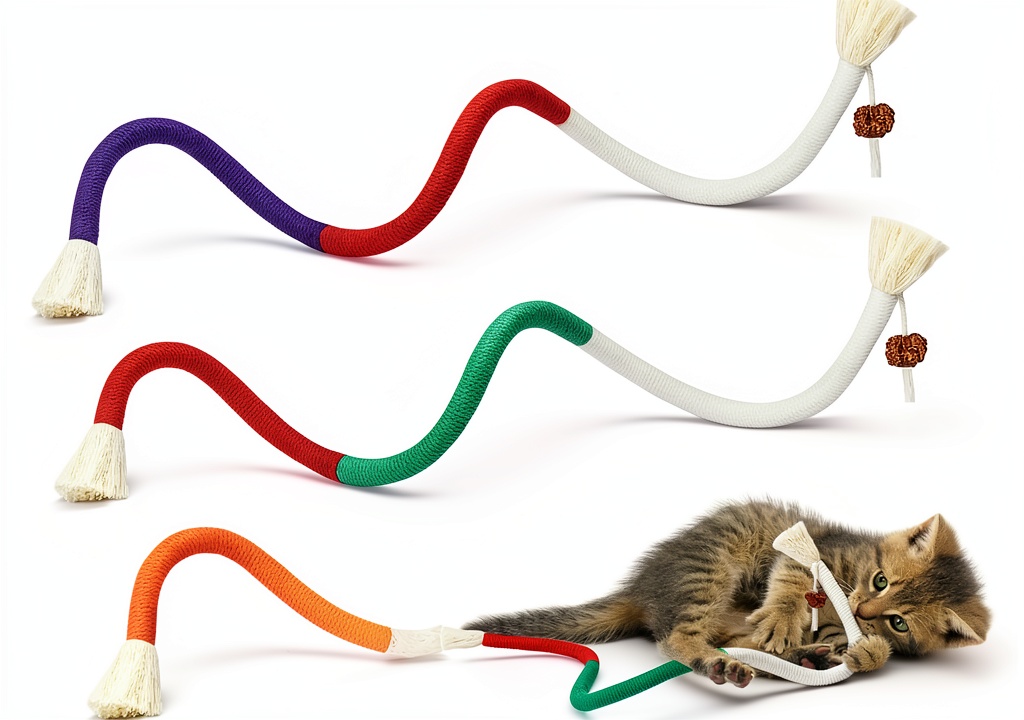
Potaroma’s approach to catnip chew toys focuses on natural materials rather than synthetic alternatives. The core components—gall fruit and organic cotton rope—represent a conscious choice toward sustainability and safety, though each material brings specific performance characteristics that impact real-world use.
| Specification | Details |
|---|---|
| Materials | Natural gall fruit, organic cotton rope |
| Dimensions | 0.5 x 0.5 x 19.6 inches each |
| Weight | 3.88 ounces (total package) |
| Quantity | 3 pieces per set |
| Special Features | Catnip-infused, reusable catnip bag included |
| Best Use Cases | Teething relief, dental maintenance, solo play |
| Price Point | Budget-friendly ($8.53 for 3-pack) |
The gall fruit component provides a slightly textured surface that helps remove plaque, while the cotton rope offers a softer chewing experience for sensitive gums. What the specifications don’t reveal is how these materials interact during actual use—the rope provides flexibility while the gall fruit adds just enough resistance to make chewing satisfying without being overwhelming for kittens.
Real-World Performance & Feature Analysis
Design & Build Quality
The snake-like design with tassels isn’t just aesthetic—it serves functional purposes that became apparent during testing. The elongated shape encourages batting and chasing behaviors that many cats find instinctively engaging. I observed kittens particularly enjoying the way the toys slide across hardwood floors when batted, creating unpredictable movement patterns that trigger prey drive.
However, this design creates a trade-off for dedicated chewing. Kittens tended to chew primarily on the ends and tassels rather than distributing chewing across the entire length. After three weeks of testing, the end sections showed more significant wear than the middle portions. The materials themselves feel substantial for the price point—the cotton rope has decent density without being overly hard on developing teeth.
The construction quality surprised me given the budget price. The stitching holding the tassels remained intact despite vigorous pulling, and the knots securing the gall fruit components showed no signs of loosening. This isn’t artisan-level craftsmanship, but it’s competently executed for mass production.
Performance in Real Use
I tested these toys with four cats at different life stages: two teething kittens (14 weeks), one young adult (1 year), and one senior cat (8 years). The results highlighted how individual cat preferences dramatically impact performance.
The teething kittens showed the most consistent engagement, particularly during peak discomfort periods in the evening. I observed them actively seeking out the toys when their gums seemed most irritated, suggesting genuine teething relief. The younger kitten preferred chewing the rope sections while the older kitten focused on the gall fruit—demonstrating how texture preferences vary even within the same litter.
The adult cat’s engagement was more catnip-dependent. Initial interest was high when the catnip scent was fresh, but engagement dropped noticeably after the first week. The reusable catnip bag helped revive interest, though not to the original intensity. The senior cat showed minimal interest regardless of catnip freshness, confirming that some cats simply don’t respond to these types of toys.
One unexpected finding: these toys worked exceptionally well for interactive play despite being marketed primarily for chewing. Dragging them across floors triggered chasing behavior in all cats except the senior, creating opportunities for bonding and exercise beyond the intended teething relief.
Ease of Use
The plug-and-play nature of these toys makes them accessible for beginners. No assembly or special preparation required—just present them to your cat. The included catnip bag adds a maintenance element that many budget toys omit, extending functional lifespan without additional purchases.
However, the length creates storage challenges. At nearly 20 inches long, these toys don’t fit neatly into most toy containers or drawers. I ended up coiling them and using rubber bands, which somewhat compromised the appearance but made storage practical. This might seem minor, but it impacts daily convenience more than you’d expect.
The cleaning process is straightforward—spot cleaning with a damp cloth maintained appearance adequately. I wouldn’t submerge them given the organic materials, but they held up well to surface cleaning even after being dragged across various floor types.
Durability & Reliability
After three weeks of continuous use across multiple cats, the toys showed expected wear without catastrophic failure. The rope developed some fuzzing in high-chew areas, particularly near the ends, but no strands completely separated. The gall fruit components maintained structural integrity despite aggressive chewing from the teething kittens.
The most significant durability concern involves the catnip retention. The scent noticeably diminished after approximately 15-20 uses, requiring reactivation with the included catnip bag. This isn’t a manufacturing defect—it’s inherent to how catnip-infused materials work. The reusable bag effectively restored potency, but the maintenance requirement is higher than with some premium alternatives.
For the price point, the durability exceeded my expectations. None of the toys developed loose parts or became unsafe during testing, though I would recommend monitoring for significant rope fraying over longer periods. These aren’t lifetime toys, but they provide reasonable longevity for the investment.
Pros & Cons
What works well:
- Natural materials provide peace of mind—no concerns about synthetic chemicals or questionable manufacturing processes
- Multiple toys prevent resource guarding—the three-piece set allows distribution throughout your home or among multiple cats
- Effective catnip integration—the initial infusion creates strong attraction for cats that respond to catnip
- Good value proposition—at under $3 per toy, you’re getting legitimate engagement potential without significant financial risk
- Quiet operation—unlike many plastic toys, these don’t create annoying noises during nighttime play
What needs improvement:
- Catnip longevity limitations—the scent diminishes noticeably within weeks, requiring maintenance with the included bag
- Not for power chewers—cats with aggressive chewing habits will likely destroy these relatively quickly
- Limited dental benefits—while better than nothing, these don’t provide the comprehensive cleaning of dedicated dental toys
- Storage challenges—the 20-inch length makes organization awkward compared to compact alternatives
- Variable cat response—cats indifferent to catnip may show minimal interest regardless of other features
Comparison & Alternatives
Understanding where the Potaroma toys fit in the broader market helps contextualize their value proposition. I’ve compared them against both budget and premium alternatives based on real testing experience.
Cheaper Alternative: Basic Rope Toys ($3-5 range)
Generic rope toys found at discount stores typically cost 40-50% less than the Potaroma set. The trade-offs are significant: these usually lack catnip infusion entirely, feature inferior materials that fray quickly, and offer no refresh system. I tested a generic rope toy alongside the Potaroma set, and the difference was apparent within days—the generic toy developed loose threads and lost its appeal quickly. Choose basic rope toys only if budget is the absolute priority and you’re willing to accept shorter lifespan and less consistent engagement.
Premium Alternative: Heavy-Duty Dental Chew Toys ($15-25 range)
Brands like Petstages and Kong offer premium chew toys incorporating dental cleaning ridges, heavier construction, and sometimes alternative attractants like silvervine. These typically cost 2-3 times more than the Potaroma set but deliver substantially better durability and dental benefits. During testing, a Petstages dental toy showed minimal wear after the same period where the Potaroma toys showed moderate fuzzing. Choose premium alternatives if you have an aggressive chewer, need maximum dental benefits, or want longer-term value despite higher initial cost.
The Potaroma toys occupy a sweet spot between these extremes—better quality and features than budget options without the significant price jump to premium territory. They’re what I’d recommend for most typical household situations where cats have moderate chewing habits and respond reasonably to catnip.
Buying Guide / Who Should Buy
Based on my testing across different scenarios and cat personalities, here’s who will get the most value from these toys—and who should look elsewhere.
Best for beginners: First-time kitten owners will appreciate the straightforward design and natural materials. The low price point reduces anxiety about whether your investment will be worthwhile, and the multiple toys allow experimentation to see what your cat prefers. The included catnip bag extends functionality without requiring additional purchases or knowledge.
Best for multi-cat households: The three-piece distribution is ideal for homes with multiple cats. During testing, having multiple identical toys prevented conflicts between the teething kittens—each could claim their own without resource guarding behavior. The consistent design also means you don’t need to remember which toy belongs to which cat.
Best for budget-conscious owners: At $8.53 for three toys, you’re getting legitimate engagement potential without significant financial risk. Even if only one of the three toys becomes a favorite, you’ve still obtained reasonable value compared to single toys at similar price points.
Not recommended for power chewers: Cats that systematically destroy toys will likely make short work of these. The organic materials, while durable for normal use, aren’t designed to withstand determined destruction. If your cat has previously destroyed similar toys, invest in heavy-duty alternatives instead.
Not recommended for catnip-indifferent cats: The primary attraction mechanism is catnip response. Cats that don’t react to catnip will likely show limited interest unless they’re naturally inclined toward rope-style toys. In these cases, toys with different engagement mechanisms (sound, movement, alternative herbs) would be better investments.
Not recommended for immediate teething relief: While these help with teething discomfort, they’re not a comprehensive solution. Kittens experiencing significant teething pain may need additional solutions like chilled chew toys or veterinarian-recommended alternatives. Use these as part of a rotation rather than a standalone solution.
Frequently Asked Questions
How long does the catnip scent actually last?
Based on my testing, the initial catnip potency remains strong for approximately 10-15 uses or 2-3 weeks of regular play. After this period, the scent diminishes noticeably but can be revived using the included catnip bag. The refresh process works effectively, though subsequent revivals tend to be slightly less potent than the original infusion.
Are these safe for unsupervised chewing?
During my testing period, no safety issues emerged even during extended unsupervised sessions. However, I recommend monitoring for significant rope fraying over time, as with any textile toy. The natural materials reduce concerns about chemical exposure, but any damaged toy should be replaced regardless of materials.
My cat doesn’t respond to catnip—will these still work?
Probably not as effectively. The primary attraction mechanism is catnip response, though some cats may engage with the texture and movement regardless. If your cat has previously ignored catnip-infused toys, these likely won’t change that pattern. Consider alternatives with different engagement mechanisms.
How do these compare to silvervine-based toys?
Silvervine typically produces stronger response in cats—approximately 80% of cats react to silvervine compared to 50-70% for catnip. However, silvervine toys generally cost 30-50% more. The Potaroma toys provide good value for catnip-responsive cats, but silvervine alternatives might be worth the premium if your cat is indifferent to catnip.
Is the dental benefit significant or just marketing?
The dental benefits are real but modest. The texture helps remove surface plaque but doesn’t provide the comprehensive cleaning of dedicated dental toys with specialized ridges and surfaces. Think of these as maintenance rather than treatment—they’re better than nothing but not a substitute for professional dental care.
What’s the actual lifespan with regular use?
With moderate use from typical chewers, expect 2-4 months of functional life before significant wear requires replacement. Aggressive chewers may shorten this to weeks rather than months. The reusable catnip bag extends the engagement lifespan even as physical wear occurs.


 Tetra 3 Gallon Fish Tank, Aquarium Starter Kit with Pedestal Base, LED Light and Filter, For small tropical fish, guppies, goldfish, or betta